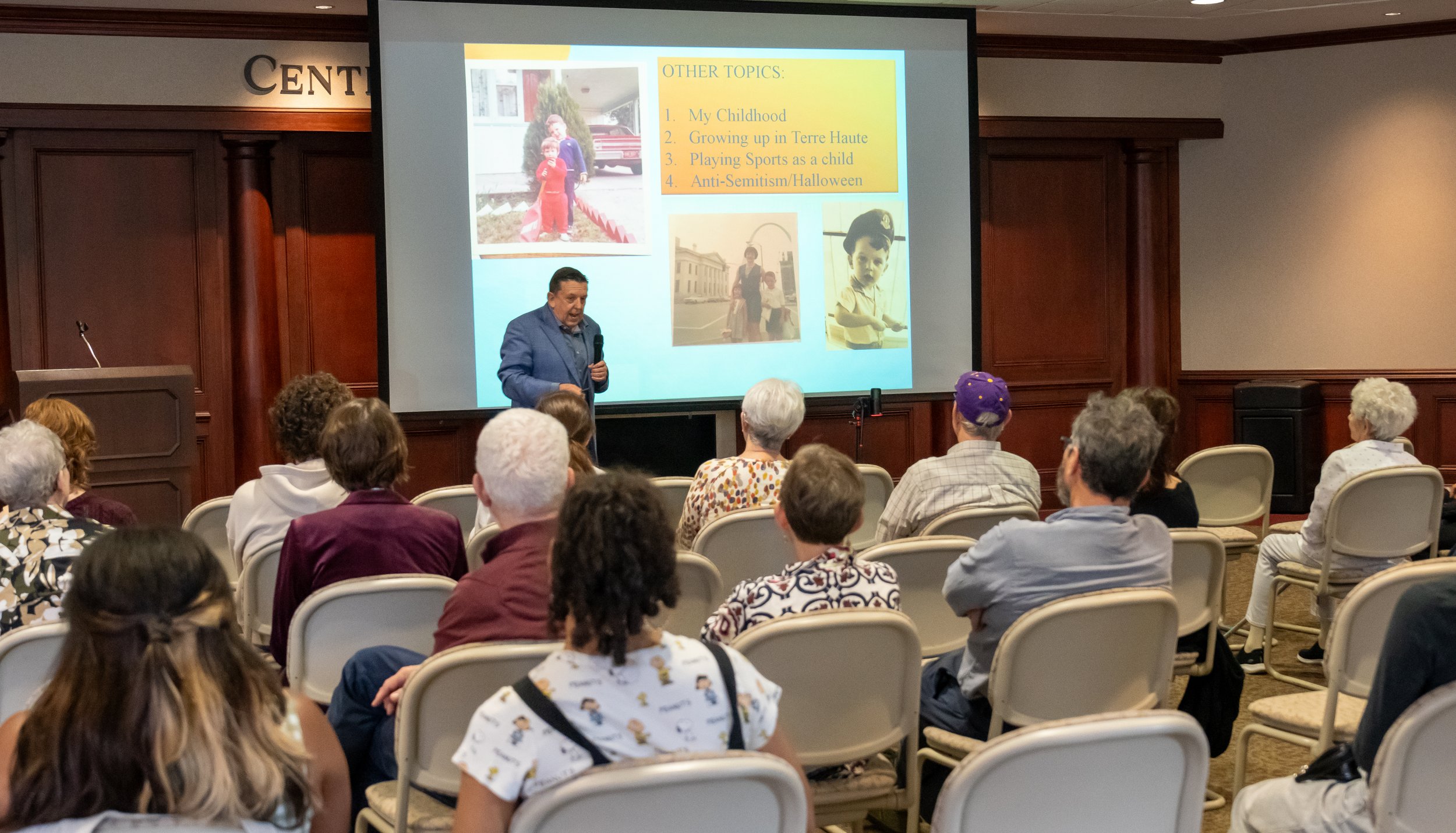
Clay Walker Brought Madison to Life at Centenary's Constitution Day Convocation
Centenary College celebrated its annual Constitution Day Convocation in the Whited Room on Thursday, September 18, at 11:10 a.m. The keynote speaker was Clay Walker, the assistant administrator of Caddo Parish, who delivered a talk entitled "James Madison's Solution." Walker's presentation focused on redistricting, gerrymandering, and Madison's principles from the 18th century to the political issues confronting Americans in 2025.
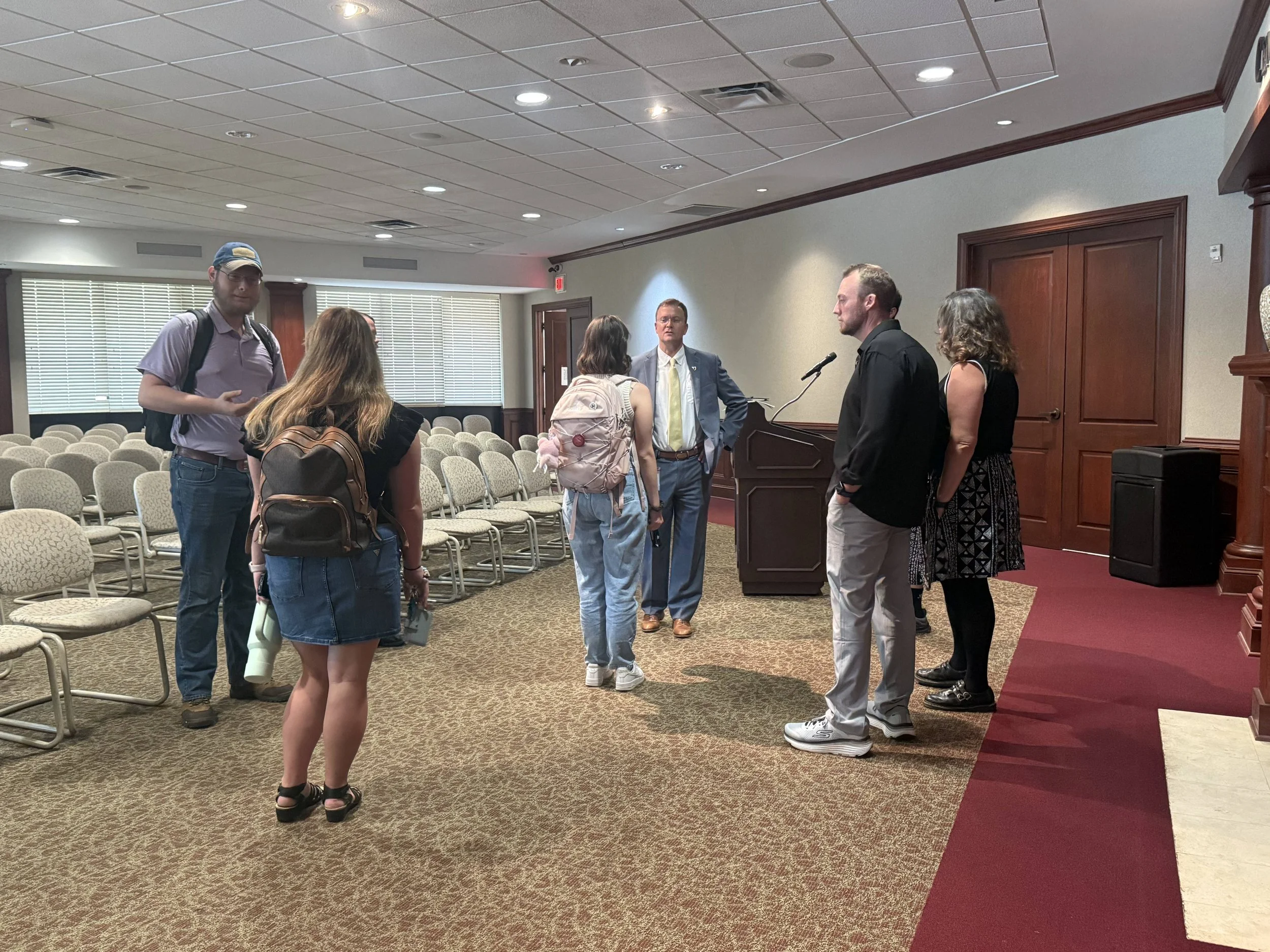

Constitution Day is observed every year on September 17th to remember the signing of the United States Constitution in 1787. Higher education institutions throughout the country host events to recognize the day, but Centenary made its event more than a box-checking exercise. The convocation allowed students and faculty to think about the Constitution as it exists and continues to be relevant in their lives. Centenary has previously held speeches on what it means to be a citizen and engage in civic duty. This year continued that theme while examining how Madison's concepts survived the political debates of today.
Walker addressed the topic with a common-sense perspective. He explained that, being employed in local government, he understands the environment of how policy decisions are made and the feedback to policy decisions from citizens. Walker observed that Madison, as the so-called "Father of the Constitution," was a visionary of sorts, thinking of a type of government to limit anarchy that does not grant any one position complete power. Madison's approaches to policymaking were checks and balances, separating powers, and ensuring no group gained complete power. Walker noted these elements remain ingrained in the values of American democracy, but he hoped that through his inquiry, the audience would consider thoughtfully if these approaches that formed American democracy are still biting as Mr. Madison wanted them to be.
Gerrymandering was another topic Walker touched on in his speech. He spoke about how district lines can influence an election long before anyone votes. He pointed to California and Texas, where recent redistricting disputes have created great political turmoil in the states. Walker's references to those events hinted that Madison's framework still battles with issues. He even made the argument that even though the Constitution was drafted over two hundred years ago, the stakes are still being raised in 2025 because the Constitution still matters and that it is still impacting norms and power for political arguments and political choices today.
For the students who heard the convocation, this was not just a history lesson; it was a reminder that the rights you have to vote and hold free speech today are rights that are guaranteed in the Constitution. Walker emphasized that the Constitution is not just something from the past. It is not only a foundational framework. The Constitution has created a living framework for all elections, court rulings, and policy decisions.
Constitution Day is designed to celebrate the framers, but in discussing Madison's words, Walker's address pointed out that citizens have a part in the process, also. Walker emphasized that even though Madison established the plan, it is the people today who have that responsibility to ensure the longevity of the republic. The students were invited to reflect on how they were contributing to the future of democracy, either through their vote, their civic engagement, or their general awareness.
In the end, the Constitution Day Convocation organized by Centenary left the audience with more questions than answers. The Constitution has governed this country for 200 years, but each generation must make decisions about how to read the document and apply it to new problems. Walker's remarks also reminded everyone in the room that democracy is not guaranteed. It requires participation, discussion, and consistent work to protect it.
Constitution Day at Centenary was not just about remembering what occurred in 1787. It was an acknowledgment that the Constitution is worth remembering in 2025 and onward. The students left with a better idea of Madison's vision and, more importantly, left with a challenge to think about how they will assist in bearing that vision forward.