Picture Perfect Chemistry
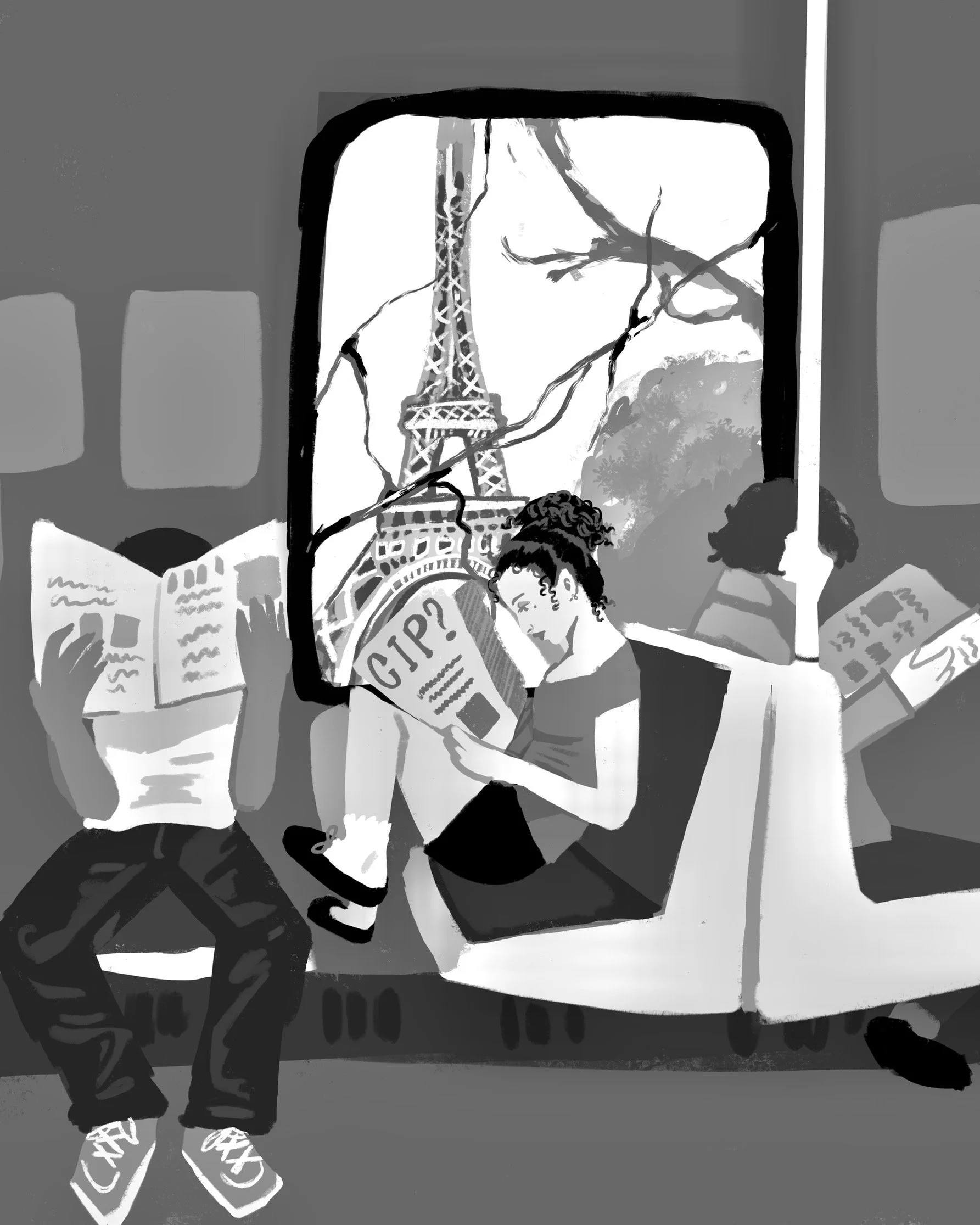
National Chemistry Week is “a public awareness campaign that promotes the value of chemistry in everyday life.” The week, celebrated by the American Chemical Society (ACS), is full of fun events that communicate the importance of chemistry. This year the week took place from October 20th to the 26th and the theme, chosen by the ACS, was “Picture Perfect Chemistry.”
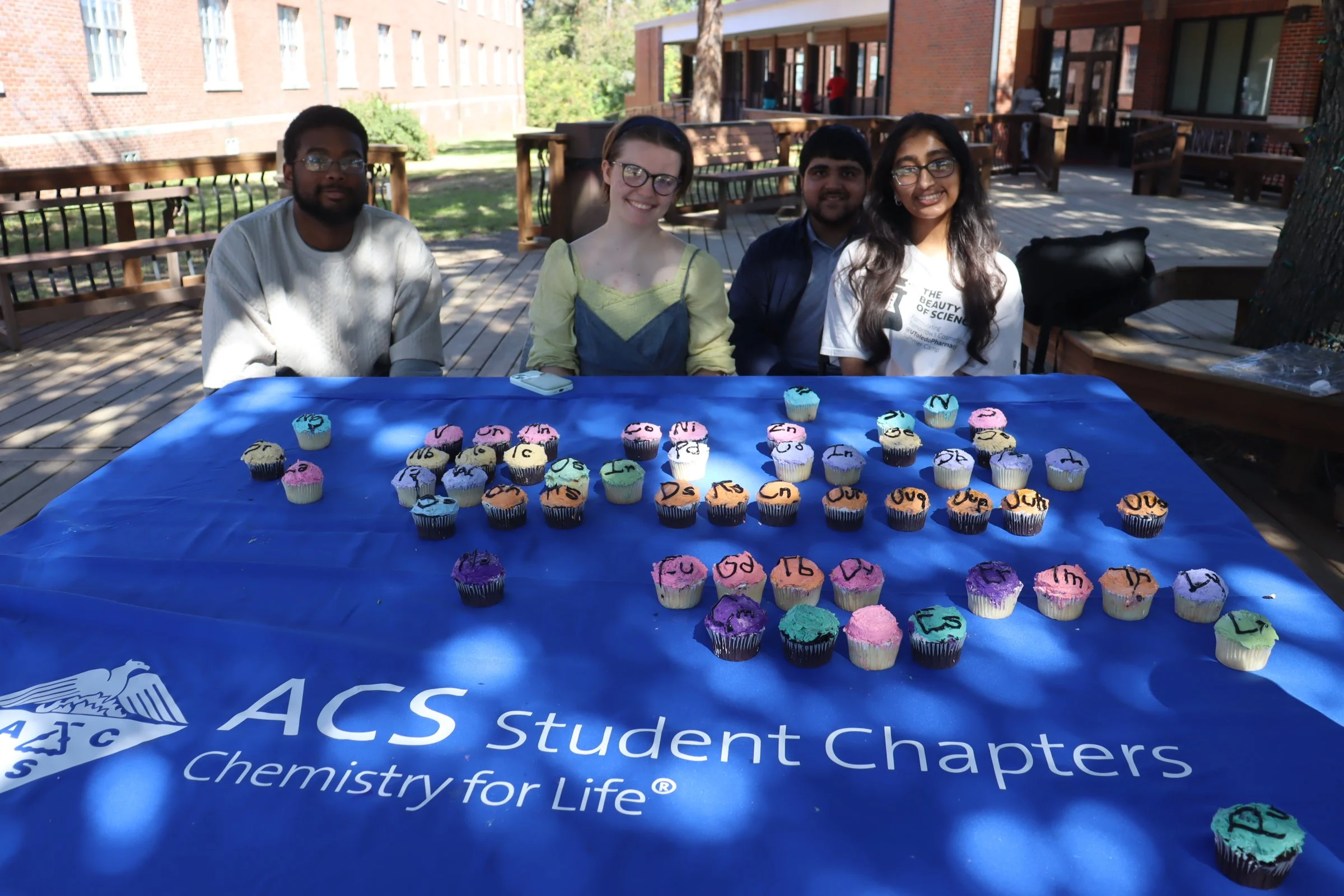
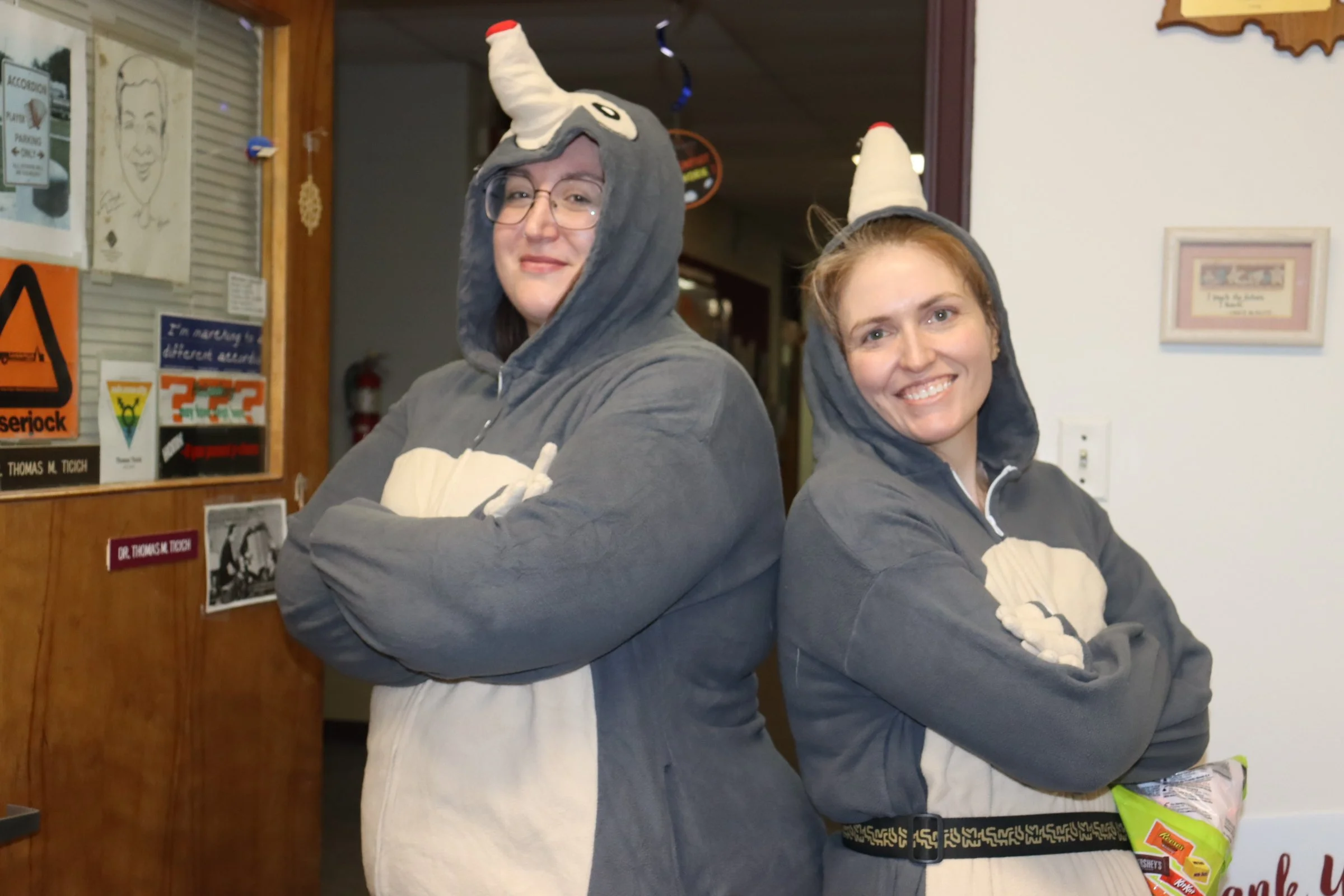
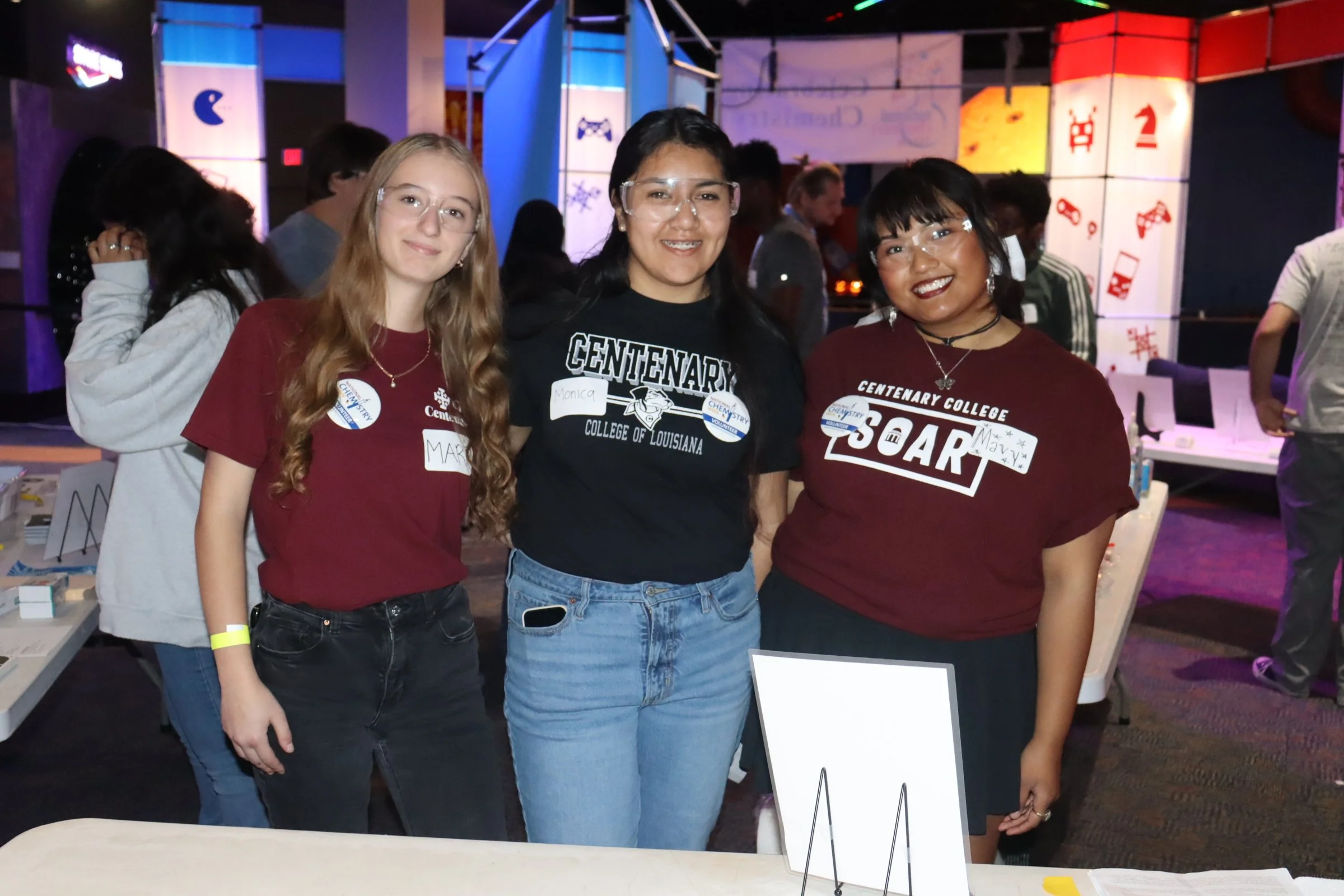
Throughout the week Centenary students participated in various experiments hosted on the caf deck during lunch hours. The Chemistry Club president, Mavy Gigante, 3rd year Biology major, said the Mole Day event “Guess the Moles of Candy” was a lot of fun because they had many people interested in taking photos with their props after guessing the number of moles in the glassware. They also had Dr. Murphy and Dr. Evan dressed up as moles! “My favorite part of National Chemistry Week is that it isn’t just for STEM majors to celebrate, but for everyone!” Mavy said.
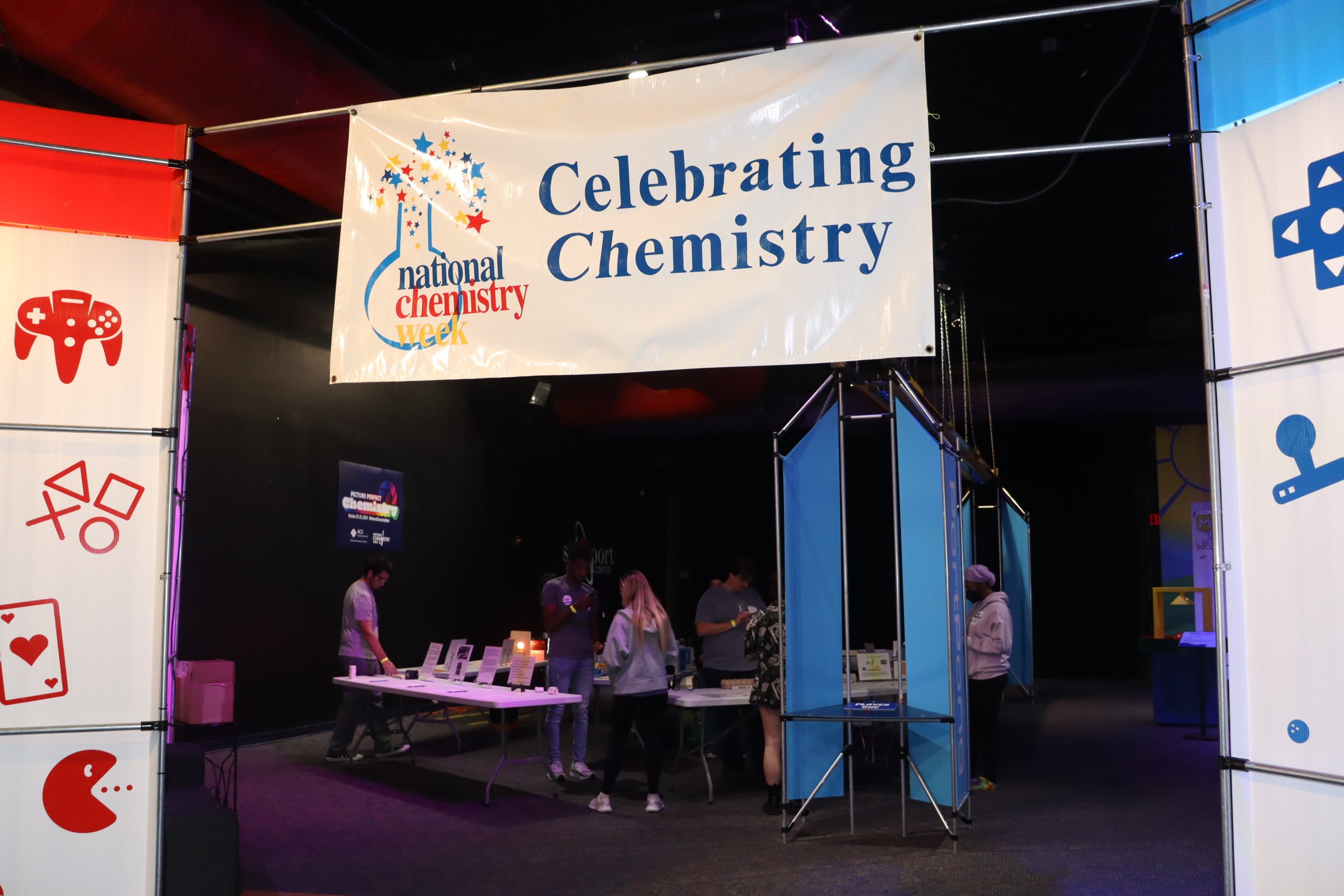
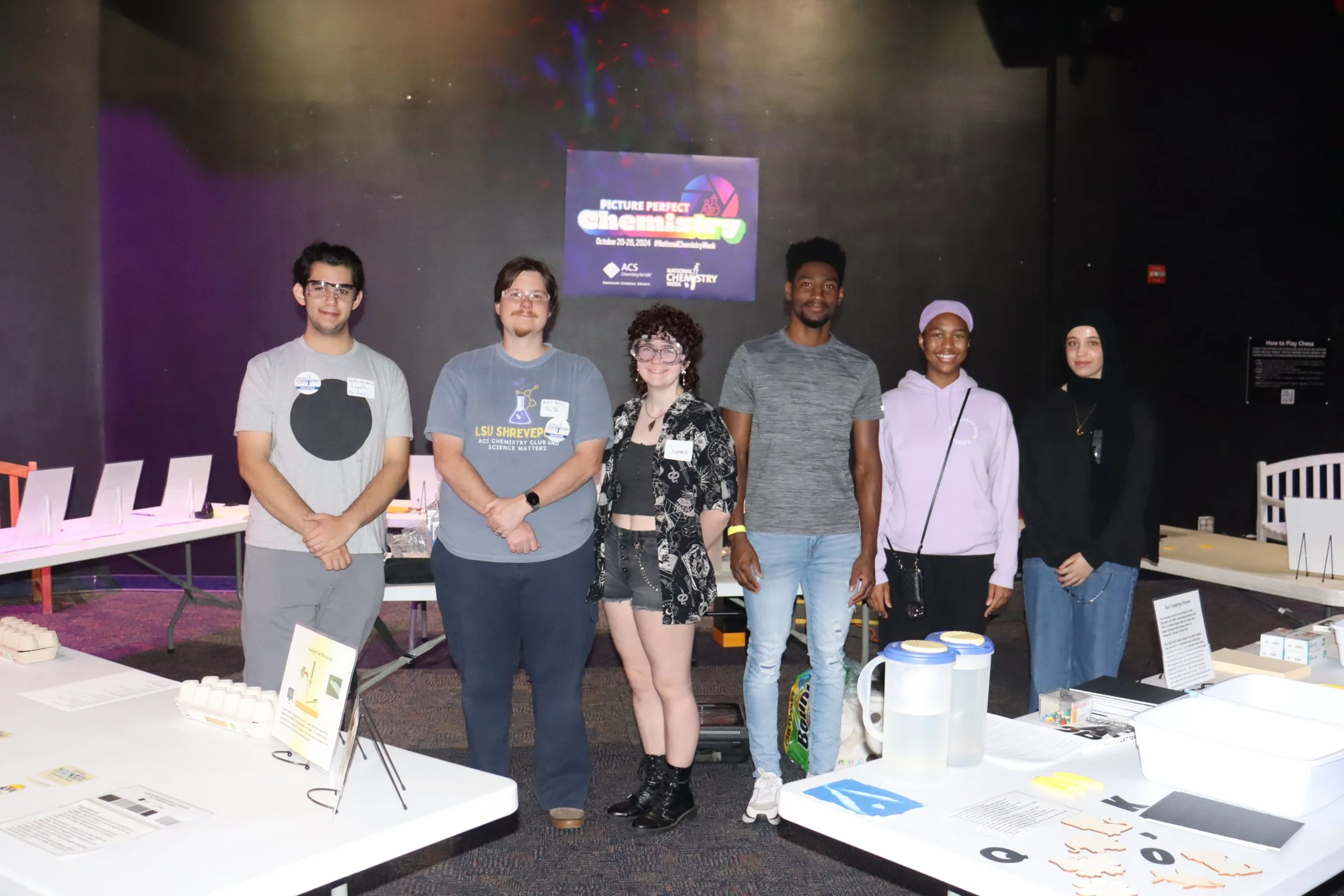
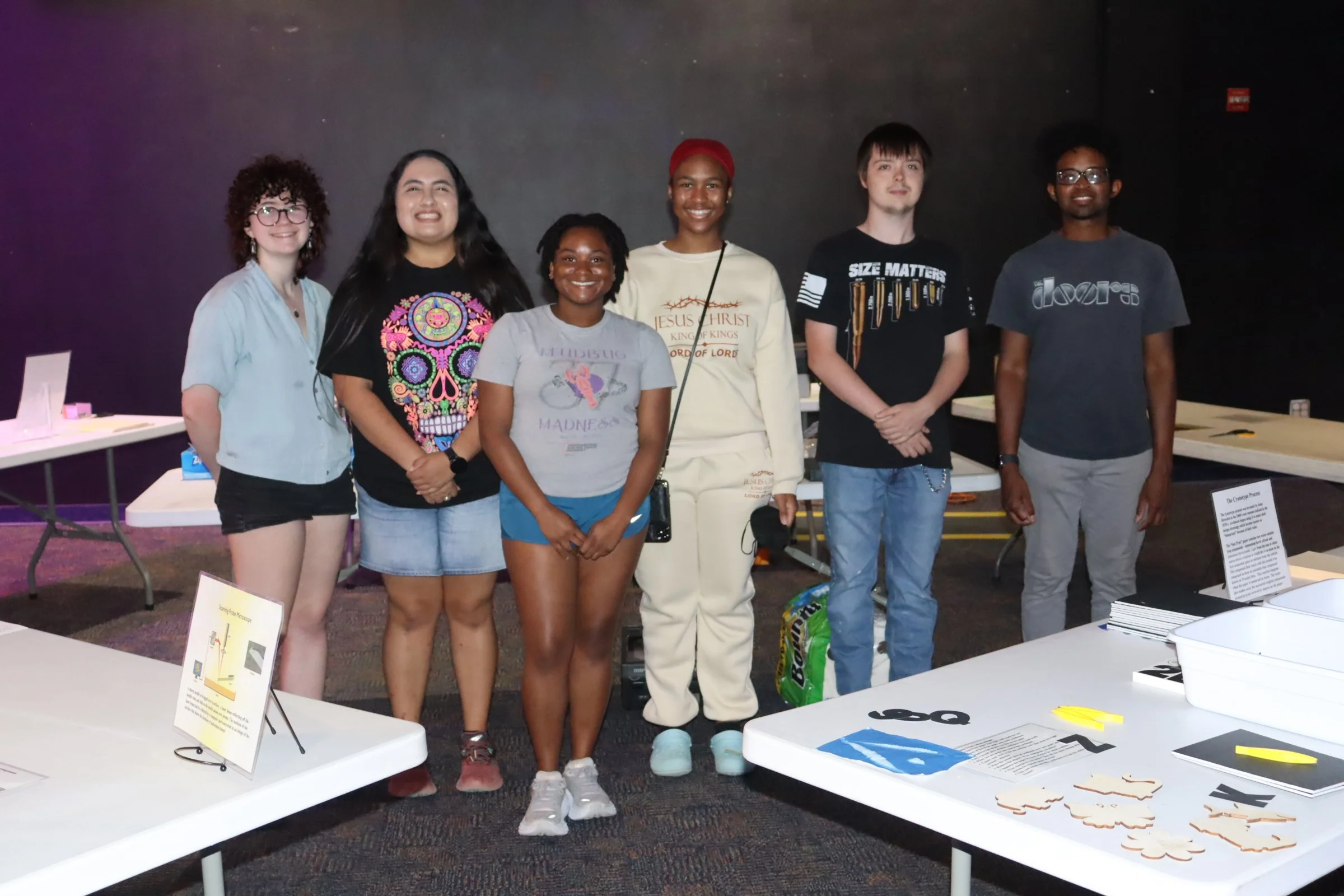
For the finale, Centenary and LSUS ACS Student Chapters came together to sponsor five hands-on activities at Shreveport’s Sci-Port Discovery Center. Each activity focused on chemistry related to making images. Dr. Ticich is the National Chemistry Week Coordinator for the local American Chemical Society section and has organized similar outreach events since 2001. He gave us insight into the ‘how’ and ‘what’ of each activity:
Imaging Without Light - Participants learned about “seeing” an image through “feeling” by dragging a magnetic strip across a refrigerator magnet to learn about its magnetic force arrangements. This models techniques that allow chemists to obtain images of atoms on a surface by feeling the forces as a probe is dragged across.
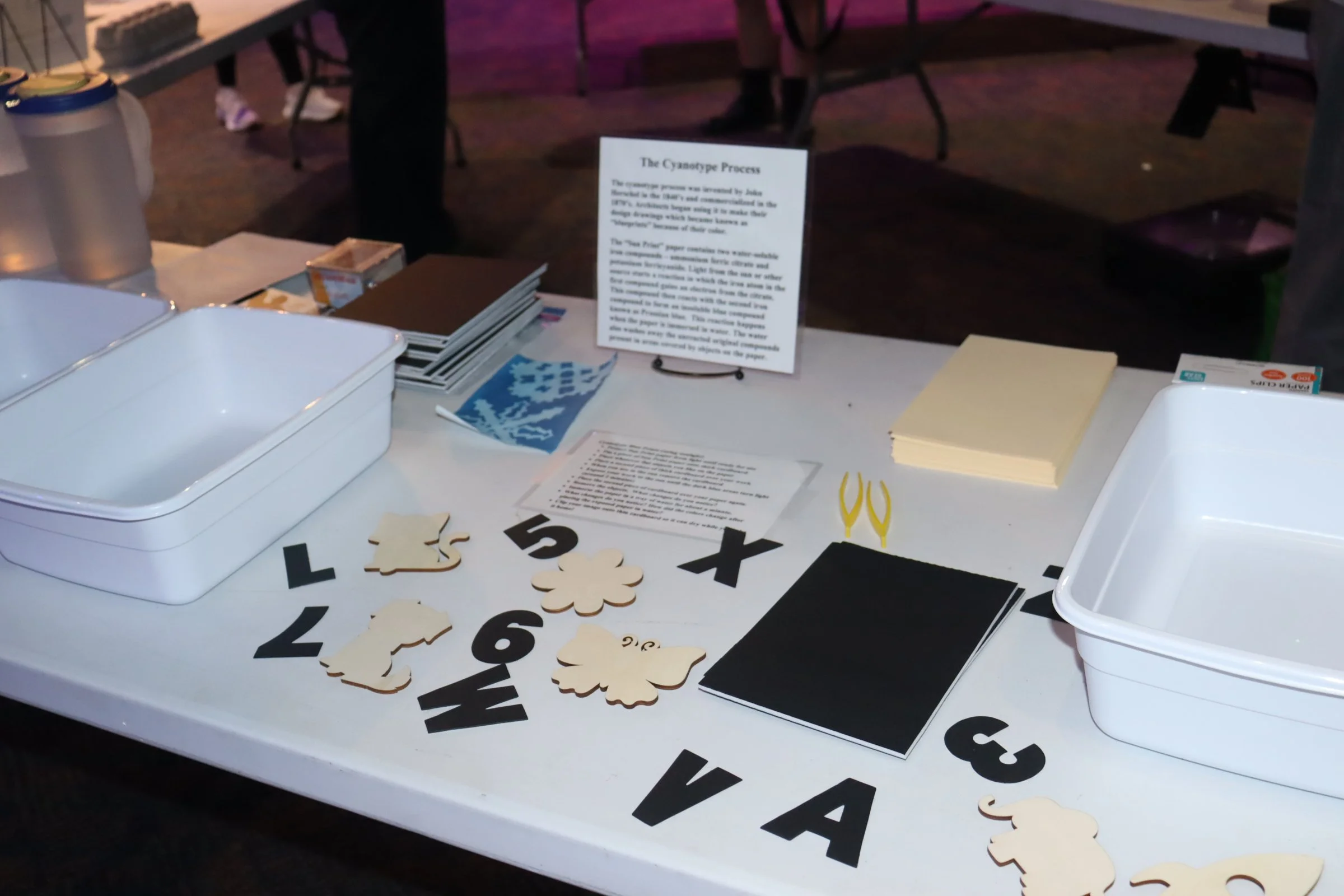
Cyanotype Blue Prints - The cyanotype process, which dates to the 1800’s, uses sunlight to initiate a reaction between two iron compounds to create images and was used by architects to make design drawings known as blueprints because of their distinctive color. Participants made their own images using the technique of paper coated with the compounds and the abundant sunshine.
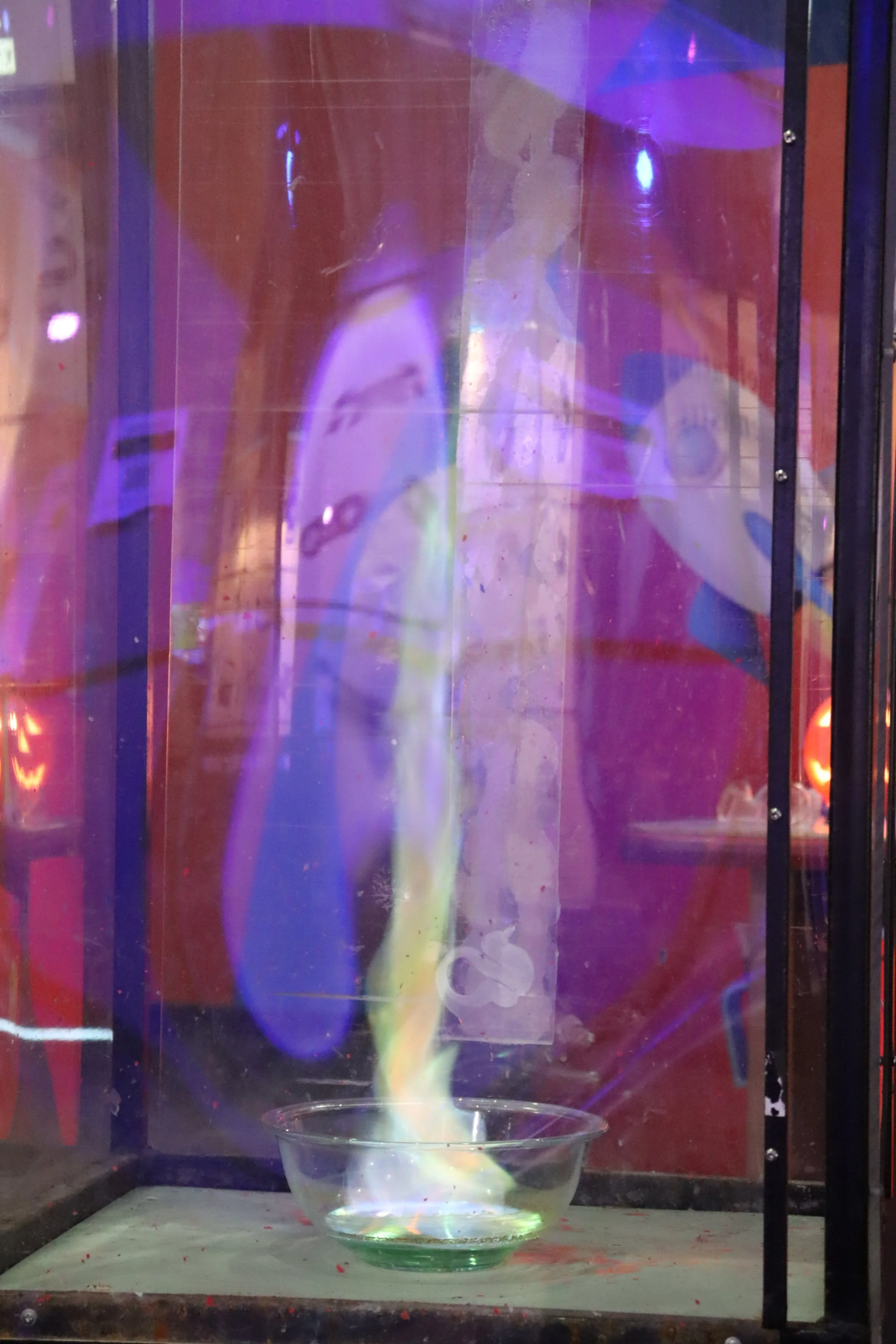
Writing With Sunlight - This activity models the chemistry of silver salts in the first black and white films. A flat object is fastened to the side of a glass bottle filled with a slurry of silver carbonate which is then placed in the path of a bright light. The light chemically changes the silver ions to dark-colored silver atoms revealing the outline of the object in the slurry.
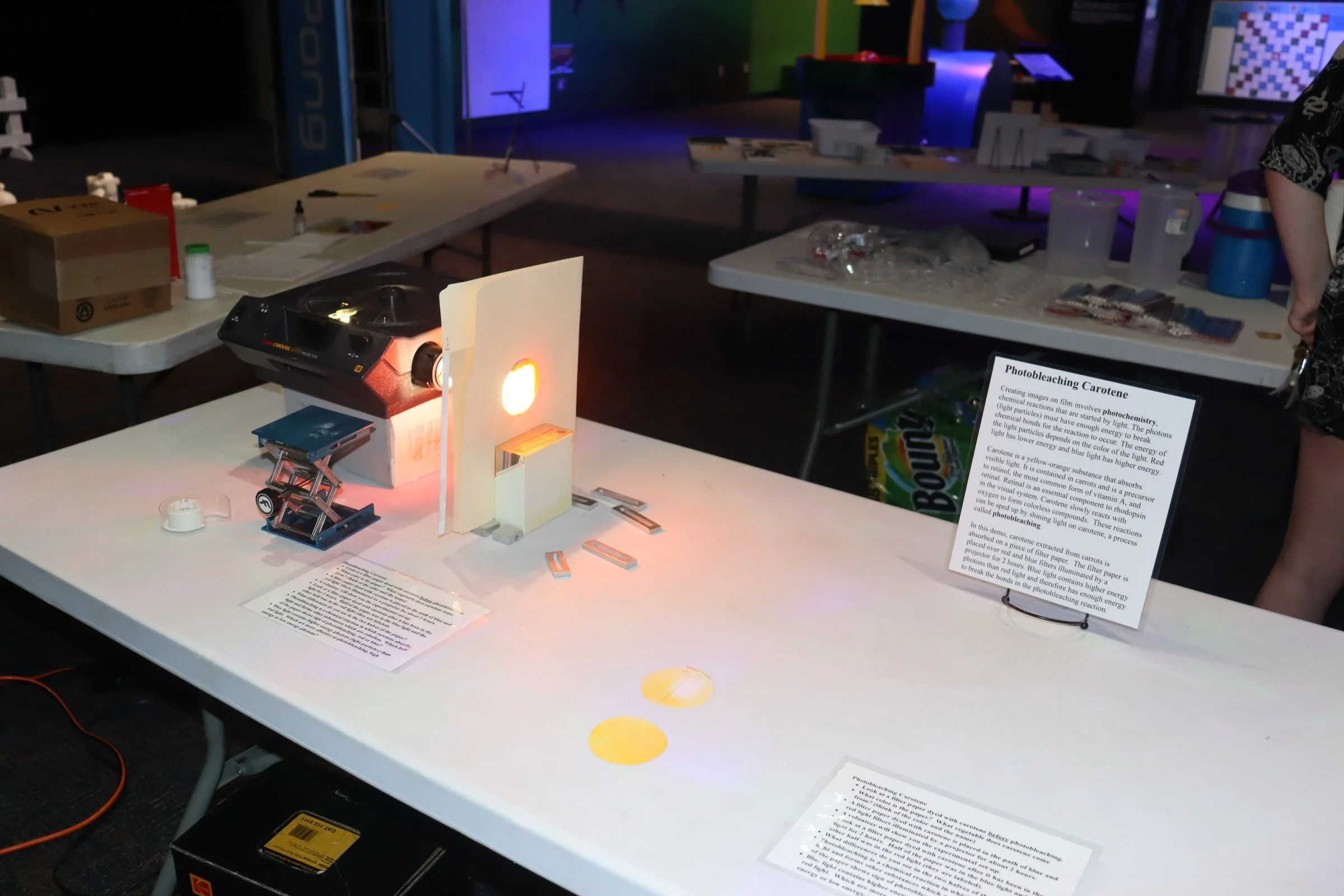
Photobleaching Carotene - This activity shows how the color of light can affect its ability to initiate chemical change. Light pushed through red and blue filters shines on a disk coated with carotene (extracted from carrots) which has a yellow-orange color. The blue light, which has higher energy than the red light, can break a chemical bond in carotene which is then converted to colorless compounds through reaction with oxygen. The red light does not have sufficient energy to break this bond so no bleaching reactions are observed from it. This relates to the chemistry of vision.
James Lu Valle – Pioneer at Eastman Kodak – Participants were invited to complete a crossword puzzle based on the life of this extraordinary chemist. As the first African-American to work for the company, he helped develop the Kodachrome process, the first color film process. His amazing life also includes winning a bronze medal in track and field at the 1936 Berlin Olympics, completing his PhD under the direction of future Nobel Laureate Linus Pauling, and forging a life-long friendship with Nobel Laureate Glenn Seaborg who served as his teaching assistant in college.
The Chemistry Club looks forward to seeing everyone join in on the festivities next year!