A Cartoon’s Weakness - Artist Highlight
Hello, my name is Ethan Davis. At the time of writing this (the night before Commencement 2025), I am a graduating senior in Centenary’s bicentennial class of 2025. I’ve successfully completed the requirements for my degree as a Studio Art major, with a minor in Music: Vocal Performance. During all four of my years at Centenary, I’ve actually been the only Art Major who also contributed to performance-based organizations like the Centenary College Choir and Opera Centenary, which was a hard feeling to deal with since my love for art and my love for music constantly influenced each other. What happens when you combine art and music? Well, you’ll get many things, but one super fun thing you will get is your favorite animated Disney movies. My senior art exhibit, A Cartoon’s Weakness, is the final culmination of what all the hard work has led to. I’m truly honored to have had the opportunity to experience and create something at this level, both professionally and personally.
I have been doodling since I could walk, and only really started taking art seriously by the time I reached 8th grade. It wasn’t until I attended Airline High School and Centenary College where I began developing useful skills in conceptual design. I enjoy making art that tells a story or has a meaning that you have to look for, but some of the teachers I had throughout my years would want me to believe that drawing from real life and making things look realistic was the ultimate goal. Unfortunately, I could not agree with this fully, for I am an avid enjoyer of all things overtly expressive and cartoony. Cartoon illustration and animation have been a highly influential presence in my childhood, and it is for sure a field I am aiming to explore with my degree.
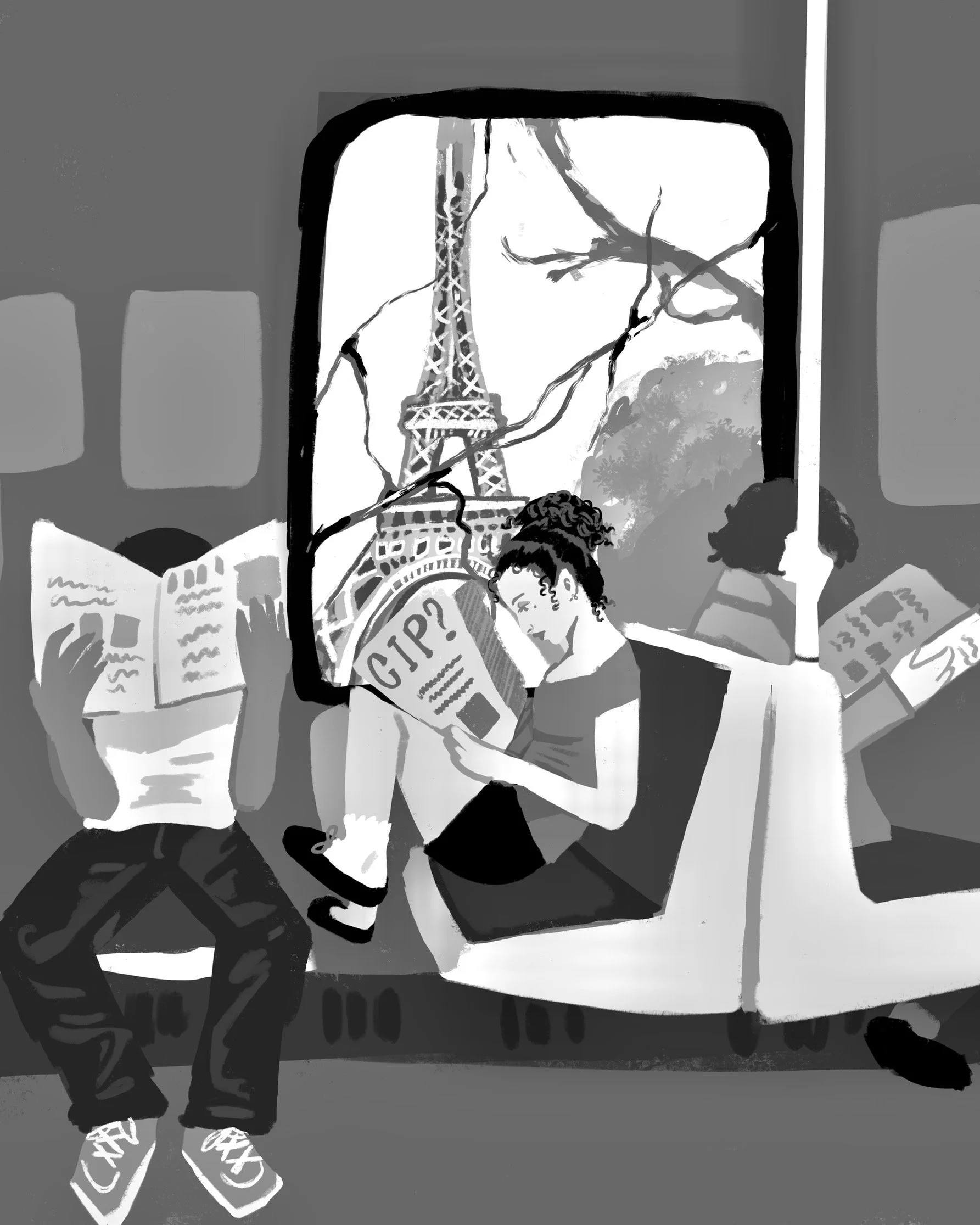
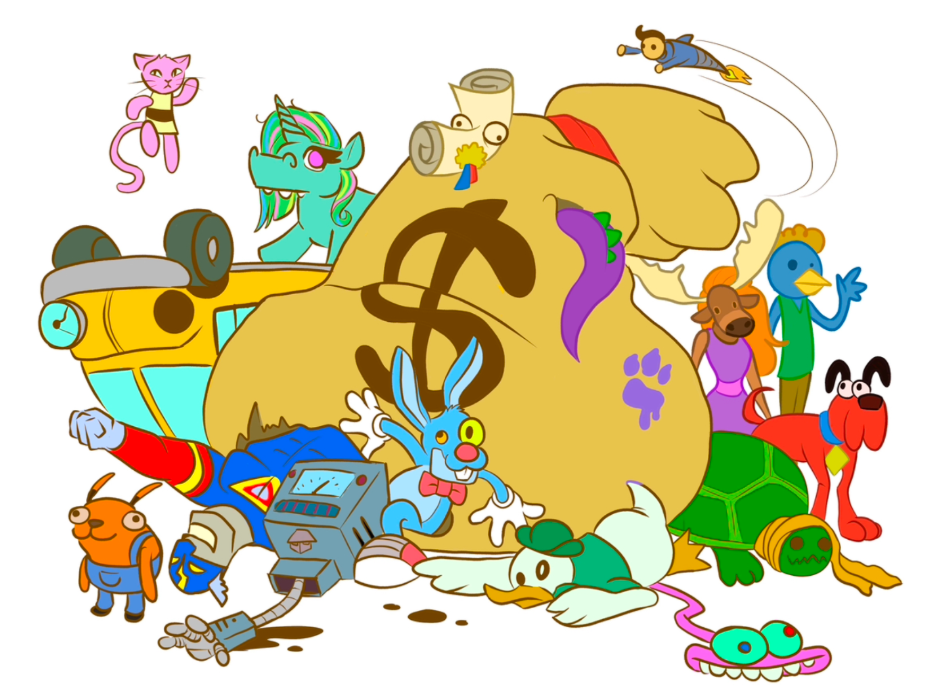
However, working for an animation company today would be wildly different than working for one in the past. My exhibit explores the issues with the animation industry and how there are external and corporate constraints that push back against what makes animation a valuable medium for storytelling. All of the art pieces in my exhibit harbor vivid colors, expression, and the same nostalgic “glow” that you’d see from your favorite animated films and shows, but it is all a satire. Every piece has something that feels off-putting or wrong, because they reflect specific values that the corporate animation world or American entertainment industry upholds. The pieces also alternate between fully digital art to traditional colored pencil, as a way to showcase both my skill set and the subtextual relationship between traditional and contemporary sides of animation.
One of the art pieces is called “Live Nostalgia,” which is specifically poking at the constant Disney “live-action” remakes that dismiss their originally animated source material in their marketing. Another piece is called “Happily Ever…,” which is a physical storyboard I created to showcase a creator’s original vision for their story being cut off by a network executive. No matter what all of the pieces are showing, they all tell the same story about animation being treated as lesser than other mediums of storytelling. Whether it’s properties being retold and resold for profit, networks controlling what is shown for profit, or creators no longer having creative control and losing their jobs to less-imaginative tools like A.I.
Overall, A Cartoon’s Weakness is a cautionary tale for any aspiring animator like myself going into the field, or really for any admirer for animation as a whole. The exhibit does not have the happiest story to tell, because it shows the truth in what is hurting creativity in today’s entertainment, and therefore hurting animation as a valid form of such entertainment. Despite the sadness, however, the exhibit was accompanied with a table of sticky notes available for anyone to write down their favorite thing about animation, their favorite animated film or show, or share their ideas. Pretty soon, the exhibit was surrounded by sticky notes from all of these people whose lives were positively influenced by animated stories, and I think that goes to show how meaningful animation still is to the public.
The sticky notes also reinforce the idea of how important it is to value the voice of a creator or viewer and not just valuing the profit. It’s why independently-owned studios have been thriving lately for the animation industry. Indie animated shows like The Amazing Digital Circus or Hazbin Hotel have been a new turning point for creators to have creative freedom again, while still growing successful and profitable without the constraints on imaginative storytelling and marketability.
I truly hope anyone who experienced my exhibit found a new love for animation or grew to like it even more, and having the chance to explore the process of exhibition under my professors Joshua Chambers and Alissa Klaus has truly allowed me to feel more confident about my work and the future.