200 Years Strong!
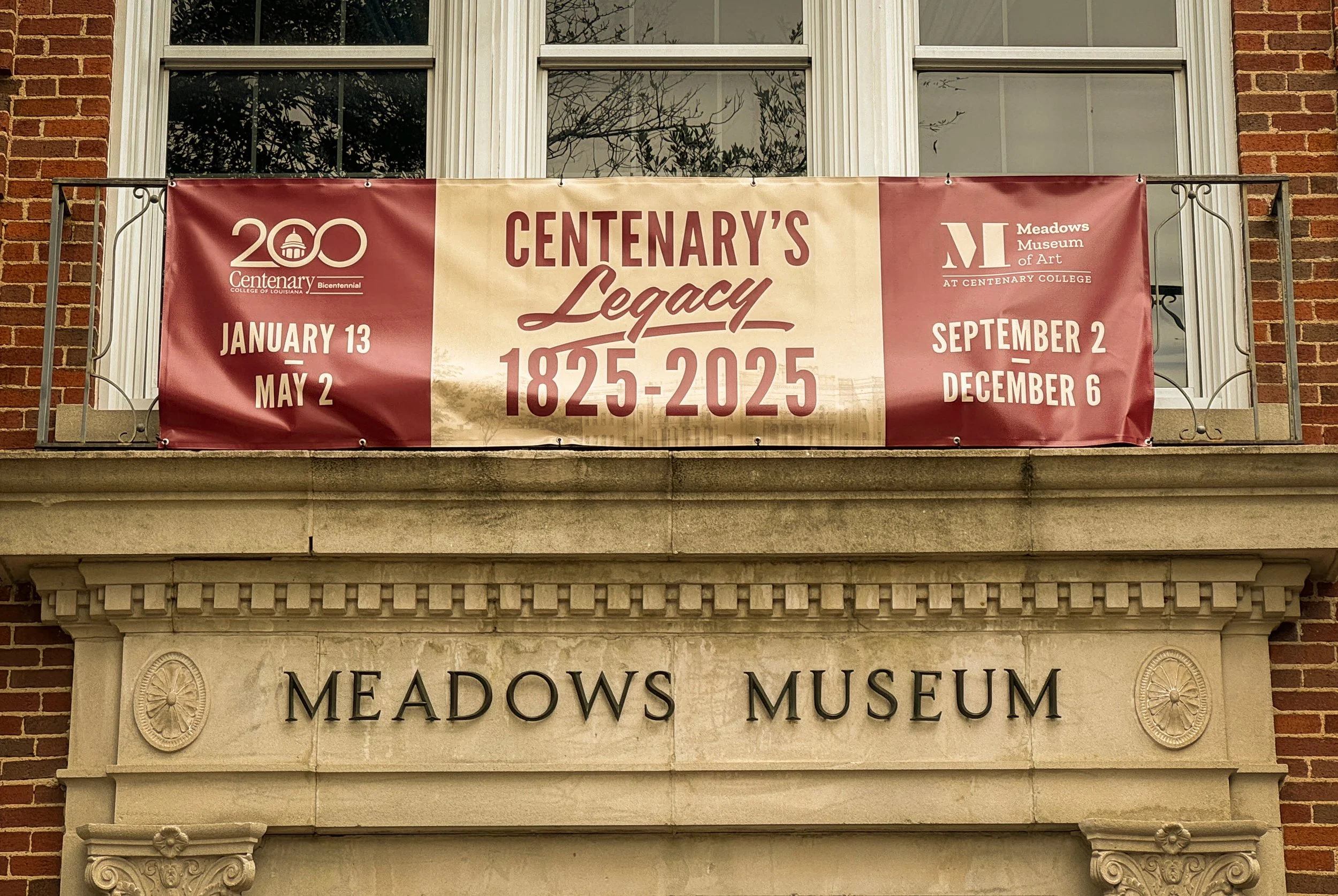
Centenary College celebrates the school’s 200th anniversary by opening a historical exhibition hosted in the Meadows Museum. On January 13th, the Meadows Museum held an opening reception to celebrate this Bicentennial exhibition. The exhibition traces the timeline of the college from 1825 to the present, showing an evolution of certain aspects of the campus, including athletics, Greek life, arts, and other activities or developments. The upstairs gallery of the exhibition was curated by students in the Fall 2024 section of MUSM 216: Introduction to Museum Studies with the aid of staff and outside sources. Alissa Klaus, Exhibit Director for the Meadows Museum and instructor for the Intro to Museum Studies course, spearheaded the collection, curation, and display for the ambitious project. Professor Klaus was interviewed to get more insight into this exhibition's making.
Q: When the bicentennial anniversary for Centenary was around the corner, was a timeline exhibit the first idea that came to mind or did you have other ideas before then?
We had the idea to use a timeline pretty early on in the planning process but didn’t know how we would incorporate it at first. Myself, Chris Brown (archivist), Kristin Sorensen (collections manager), and some student interns spent time researching timeline exhibitions online and in person to get some ideas of how we might organize the space visually.
After looking at other timelines, I decided that we should divide the room equally, giving the first and second 100-years equal space, instead of adjusting the timeline to tell more “current” stories and less history. It meant we had to look to other archives for objects to represent the earliest years and be very selective about what we included in the later years.
The upstairs galleries needed to change twice over the year to accommodate senior exhibitions, so we decided to use that space to spotlight or offer a deeper dive into different special topics (like graduation, student life, etc.) For the student life gallery, I wanted to give the students in Intro to Museum Studies ownership of the exhibition. Having each student pick a different aspect of student life was intended to let everyone work on something that they would find interesting as well as let them see their section of the wall through from start to finish.
Q: Centenary College has a very expansive history. How did you and the students take certain aspects of the school over the years and put them into a more accessible format for an exhibition?
From the beginning, I wanted to use as many originals as possible. However, like any museum, we were constrained by the space, time, and resources available to us. Some original items could be framed, others needed to be in a display table, and the items that were too impractical to show originals of were reproduced and printed on foam board (like yearbook pages). At some point, we wanted to use information out of an old publication and were trying to decide which page to reproduce. I can’t remember whose idea it was, but we decided to instead reproduce the whole booklet and let people flip through it themselves.
The one thing you can’t do with archival materials on exhibit is touch them, so this idea sparked an effort to rethink opportunities for interaction throughout the galleries to keep people engaged. I think we ended up creating eleven reproductions that people can pull off of the wall.
I also worked with several Centenary alumni to create content to supplement archival materials around the room–playing and recording sheet music, blending old images of campus with present-day photos, and creating AI-generated videos based on a still photograph. We also received a grant from the Centenary Muses to digitize some archival videos and have them accessible on iPads.
Q: Were there any hardships that you and the students faced while making this exhibition? If so, how did everyone manage to work with these problems?
The biggest hardship was when the online system that Centenary’s archives use to host all of its digitized content was hacked and offline for a few weeks. This impacted both the students in my class and the research that they were able to do, but it also impacted myself and the archivist as we researched items for the main timeline. For my class, we were able to move around some assignments and do a few research days in the library looking through physical materials, but without the assistance of the online database, it was slow going.
For myself and the archivist, we used the time as an opportunity to look through all of the objects that are not digitized from the first 100 years (and there is PLENTY that is not digitized). We also spent some time looking through photographs he took this summer while visiting some archives in Mississippi that had items related to Centenary, and we ended up including several of those stories and objects in the exhibition. This involved some information that Chris was unaware of until this past summer, so it helped us add some additional context that had never been included in the telling of Centenary’s history before.
Q: What was the most enjoyable part of this process for you and the students?
This was the biggest exhibition I have created so far. My favorite part of the process this time was the installation–after doing all of the research, writing, editing, prep work, measuring, framing, printing, etc., it felt like putting the last pieces together of a huge puzzle, or like decorating the world’s biggest scrapbook page. Similarly, I always enjoy teaching the curatorial process to students and seeing them get to experience the finished product, after working so hard behind the scenes.
Q: A reception was held for the opening of this exhibition. How did it feel seeing people look at you and the students' hard work for the first time?
It felt very good! It is nice to get compliments when people like a contemporary artist that we bring in or to have people enjoy seeing student work in the museum, but this project involved at least three staff members and over 17 students. I was so proud of everyone’s work and contributions and how it all came together in a really strong, compelling exhibition that tells the story of Centenary’s 200-year history through our school’s archives and special collections.
The exhibition is a mark of Shreveport’s finest history in education. The exhibition will be open until May 2nd from 9:00 A.M. to 3:00 P.M. Centenary will be hosting multiple events related to their bicentennial celebration each month, starting with Giving Day 2025 on February 20th from 8:00 am to 8:00 pm.