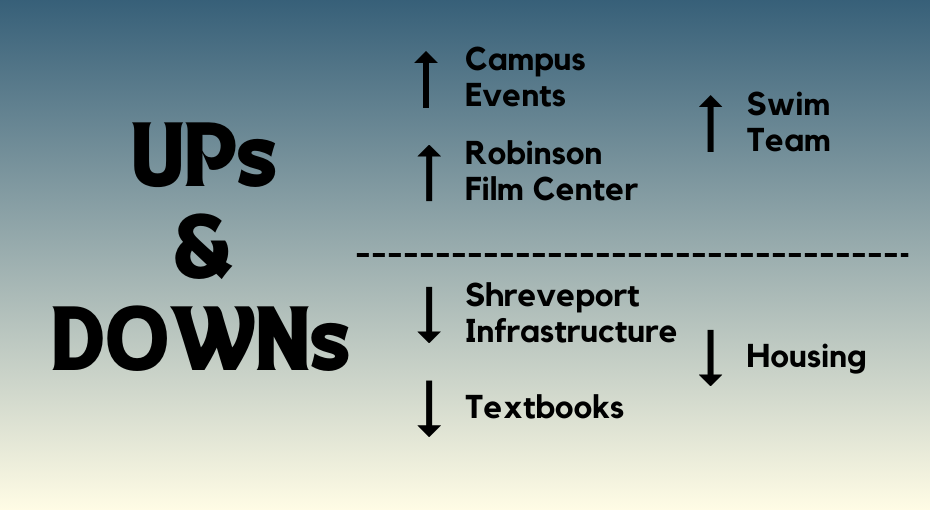
Ups
Campus Events
For being fun and making weeks like Dream Week possible
Robinson Film Center
For having fun events like The Color Purple event with Andrea Mona Bowman
Swim Team
For having good attendance at meets and doing amazing!
Downs
Shreveport Infrastructure
For not being able to handle winter weather
Textbooks
For being so incredibly expensive
Housing
For the lack of singles next year
Similar Reads

After months of tedious analysis, study, and divine visions revealed to editor Kari Johnson, Conglomerate predicts that the utter annihilation of the world will mark the beginning of the new millennium. At best, the paper's editorial staff feels that humankind might last until January 2 . . .

Alright, so you’ve done it. You, the mighty writer, have finished a poem. The line breaks are just right, the imagery is descriptive and detailed, and the piece came out exactly as you imagined. As the feelings of triumph and success wash over you, you realize you missed one crucial step: your poem has no title. While many writers believe the title is the least important part, the title is what ties everything together and indicates what the piece is about to the audience. However, it can also be the most challenging part of the writing process . . .

Writing is, at times, a very difficult thing to do. Writing poetry—especially when you’re trying to emulate a specific mood, idea, or experience—can be exceptionally difficult. It is hard to find the right words, get into the right headspace, or even just begin. Well, fear not, aspiring poets; if “study vibez” playlists on Youtube and Spotify have proven anything, it’s that music can be a powerful source of both motivation and inspiration. After all, what is music if not the poetry of sound! Skeptical of my claims? Unsure where to begin? Feeling intimidated by it all? Look no further as we take the next few minutes to discuss the merits of listening to music while writing and how it might affect your poetry . . .

Congratulations on your poem! Take a moment to appreciate your hard work so far; this is vital for our next steps of self-critique. We're halfway there, and now it's time to dig into what we can do together to improve the piece. Whether this poem is going to your publisher or your school's biannual art magazine, its refinement is important. Any level of artist needs to establish effective critiquing methods; they can solidify your ideas and pull you just as much as the reader into the poem’s world . . .
