Centenary and Hope Connections Battle Homelessness in Shreveport
Centenary, The Highlands, and Hope Connections
A 10-minute drive east of Centenary’s campus, just past the outskirts of the Highland neighborhood boundary and tucked into the corner of the I-49 and I-20 interchange sits an industrial region of the city. After passing under I-49, the Highland greenery and homes quickly give way to cracked concrete, railways, and roads under seemingly perpetual construction. This is the home of Hope Connections, a shelter and service provider for the homeless in Shreveport and the greater Northwest Louisiana Parishes.
Surrounding Hope is crisscrossing railways by warehouses as well as construction and electrical suppliers, large open concrete lots, and a golfcart dealership. The only thing like Hope is their neighbor Christian Services which serves two meals a day, everyday, for anyone who comes. These two non-profit organizations stand in deep contrast to the industrial zone surrounding them.

Fig.1. Map of Highlands neighborhood (highlighted in purple) in Shreveport, Louisiana. Centenary College of Louisiana is a short drive away from Hope Connections.
Philosophy 102 and Hope Connections
In Dr. Chris Ciocchetti’s Philosophy 102 class, Moral Problems, students are introduced to modern problems and the moral arguments surrounding them. Through the study of wealth inequality, race, sexual equality, abortion, and more, students learn real world applications of the philosophy of ethics.
Part of the class is a group trip to Hope Connections during the unit on Wealth Inequality. During this tour, students get a firsthand look at services within the Shreveport community that are attempting to solve the very issues they discussed in class. Giving students both a chance to reflect on what they have learned, but also a chance to connect with the Shreveport community.
On visiting Hope Connections, Dr. Ciocchetti said, “it’s an important part of the class for me because of the way it feels to be in that space. To cross boundaries that we get socially told that we're not supposed to cross.” More than that, he added, “people can feel awkward within that area, and I want students to learn to deal with that. I think that's part of learning to deal with moral problems. It's not just abstract, it's also very concrete.”
Cole Gantt is a freshman at Centenary from Irving, Texas. He hopes to pursue a career in social work that focuses on fighting homelessness and poverty after college. Gantt found the tour to reinvigorate his goals, saying, “I often feel like any attempts I make at helping my community will fall short and lead to no progress. Hope connections showed me that it was possible.” Part of this inspiration though, came with the discomfort Dr. Ciocchetti was hoping for. “It’s impossible to not feel guilty when walking through the building. It almost feels like I am touring someone else’s pain without actually providing any form of support.”
Freshman KaNeya Davis had a somewhat different experience. Davis said, “It made me really realize how lucky I was. Even though I did come from a low-income family, I never had to think about my next meal or where I was going to sleep.”
Dr. Ciocchetti added, “I want them to come away with a sense that there are problems in this community and that they could do something about it.”
What does Hope Do?
Hope Connections is a non-profit organization located in Shreveport, Louisiana that attempts to end homelessness through bringing together information and services for the homeless throughout Northwest Louisiana. Hope Connections focuses on those stuck in homelessness due to mental health issues, addiction, or other major obstacles that keep them from stable housing.
While they have always been a day shelter, an addition that was only added five years ago was the overnight shelter. With limited space, they have to decide carefully who they can give a bed to. Hope does assessments of everyone that comes to them to learn their level of vulnerability and what resources they might need. For a while, Hope used a method Executive Director Christa Hawkins dubbed the “college method.” This method meant that they would give beds to whoever they thought had the best chance of succeeding. In 2012, to replace this method, Hope began using the “triage method” where they chose those who needed help the most. Hawkins added, “if we don't help the people that are in the worst conditions first, they're going to stay there forever.”
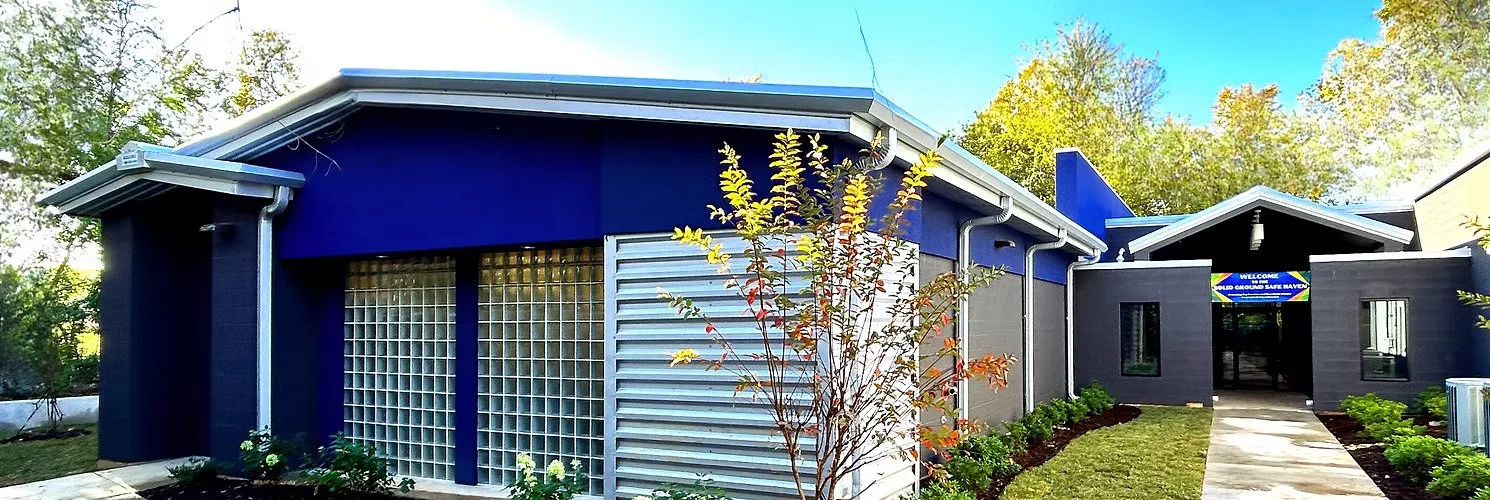
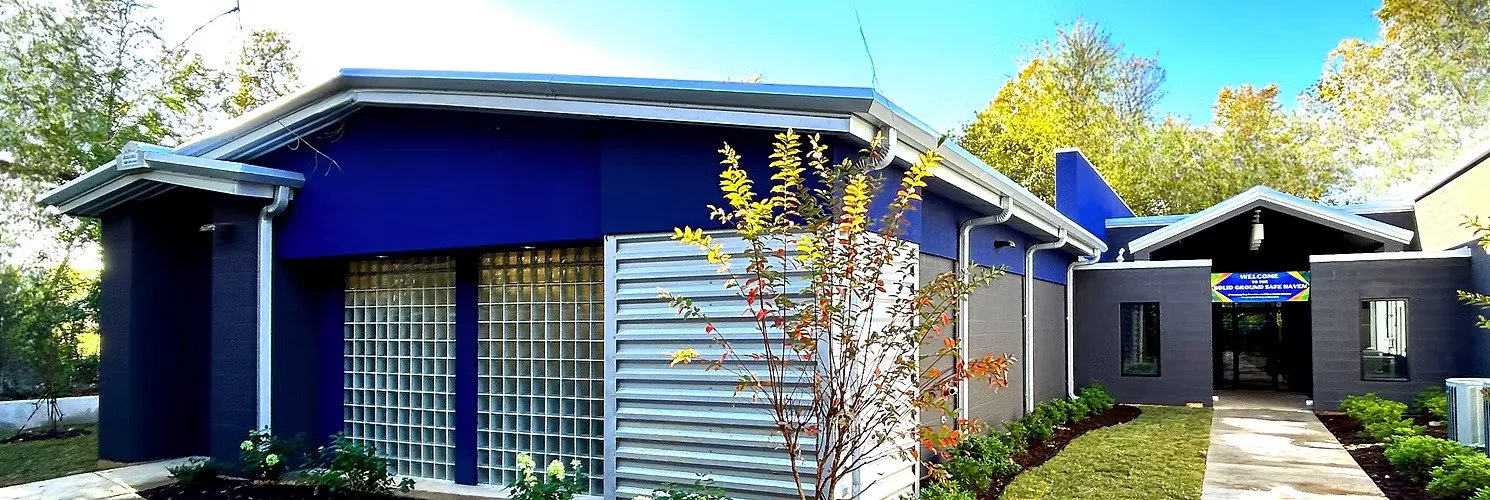
File photo of Hope Connection’s current building on Levy Street, built in 2014. The building functions as a day and night shelter, center for the outreach program, offices, and much more. (nwlahope.org)
Hawkins made it clear that the triage method has been quite successful. Three years ago, Hope set out to end chronic homelessness. Those facing chronic homelessness are defined as anybody that has been homeless for more than 12 months. When they started, there were 121 people in Northwest Louisiana they identified as chronically homeless. As of November 12, only eight chronically homeless people remain in the region. As they help more people out of chronic homelessness, they can shift their focus to those that are easier to help, allowing them to stop people from slipping deeper into homelessness.
Another resource Hope has is their Homeless Outreach Program. Hope has a team that goes out across the entire region and builds a relationship with the homeless in the community. “They go out to the camps, to the abandoned buildings, to abandoned houses, anywhere they find out people are sleeping.” Hawkins says this part is crucial because it feeds the rest of the system. On top of that, the relationships they create allow them to foster trust and get people the services they need.
The last major resource they offer is classes on how to properly function once stable housing becomes possible. Hawkins added that once stable housing is acquired, it is an extreme adjustment for people. These classes help people get comfortable with living on their own and the responsibilities that come along with it.
Christa Hawkins’ Story
The walls in Christa Hawkins’ office are covered in colorful paintings and motivational quotes. Religious knick-knacks, keepsakes, books, and papers cover every surface. In the middle of her room, a heat press machine sits on a large table, waiting to mint new designs on new t-shirts.
Originally from Monroe, Louisiana, Christa attended Millsaps College in Jackson, Mississippi to pursue a degree in art. Millsaps, like Centenary, is a small Methodist affiliated liberal arts school. During this time, Christa was an addict and did not finish her degree. She had a stint of homelessness herself, sleeping on friends’ couches. One of her friends at the time knew someone that ran a treatment center here in Shreveport, so he drove her all the way from Atlanta. Christa said, “I came here, got sober, and stayed. Actually, the first meetings I ever went to were at Centenary.”
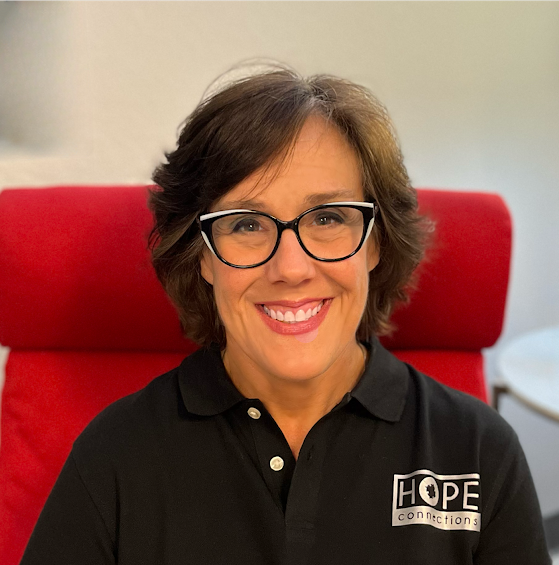
File photo of Hope Connections director Christa Hawkins. Christa has been working for non-profit organizations since 2000. (Photo provided by Christa Hawkins)
Now sober, she attempted to put her love for art to work as a marketing director. “It was horrible. I hated it. I was like, oh my gosh, this is terrible. It was suits and heels and all that and going to luncheons and dinners and that was not for me.”
After the troubled birth of her child where she almost bled out twice, Christa began to reconsider her life choices, saying, “I was like, okay, I'm not going to be in this miserable job.”
One of her friends told her about an open job at the Philadelphia Center, a place for HIV resources in Northwest Louisiana. The man in charge turned her away at first. “He was like, ‘oh, you can't do that job. It's a bunch of men and they're addicts and blah, blah, blah.’ I said, well, I was an addict.” This was not enough and he continued to turn her away.
Christa was persistent. “I would drag my baby up there every day and beg for that job.” He eventually gave in and she found that she loved it. She has been in social work ever since. The man, years later, worked for her at Hope Connections for some time.
Christa eventually went back to school, finishing her art degree at LSUS. Art, art history, and design continue to be her passions to this day. She continues to practice art and even does all the design work for Hope Connections.
What Christa Wishes More People Knew
Working with the homeless all day, writing grants, marketing, and working with the government, Executive Director Christa Hawkins is all too familiar with misconceptions surrounding her line of work. First and foremost, she does not want people to give money to panhandlers. “A lot of the time, people get upset by panhandlers. Well, that’s not our problem. Those people are not our customers.” While she admits that some homeless people turn to panhandling to get a little money, she wants it known that the vast majority are not homeless.
She sympathizes with those who want to help, but she says that the amount given rarely helps and there are better, more professional avenues to help those in need. She added, “I think it's important for people to be reminded that we're doing this with their tax money. And it's important that we do it really well because they're paying us.”
Another misconception that Christa battles with daily is the widespread belief that homeless people are lazy. Many of the people are trapped in homelessness due to things well out of their control. Christa listed a few, saying, “you can't get a job without an address. You can’t get a job without an ID. You can't get a job without taking a shower every day. There are things you need in place before you can work.”
While this misconception stops many people from rallying around the issue of homelessness, Christa wishes more people knew just how fixable homelessness really is. “It is solvable. Homeless people aren’t lazy and we can solve this if we’re willing to put time into it.” From the outside looking in, it may seem like an impossible task. Christa is the first to admit that it has been and will be hard, but she goes to work every day with the conviction to end homelessness. Christa added, “homelessness all over the country has gone up over the last few years. Our homeless rate has not because we are working our asses off. I just wish people were more hopeful or more convinced that we could fix this if we rallied around it.”
For Centenary students in particular, Christa has one message: all social issues are more complex than people think and should not be simplified. Christa added, “we should be curious about things. We don't have to know everything or have an opinion about everything. Curiosity is a good thing.” Lastly, she added, “You can only be an expert in a few things. So be that.”
Christa has committed her life to fighting homelessness. While they do not solicit volunteers often, Hope Connections has plenty of need for people interested in helping where they can either with their time or through donations. Christa encourages anyone interested in volunteering to reach out to her.