When walking to your car after a late class or heading back to your dorm after dark, most of us do not think much about safety until we have to. Campus safety, though, is something every student can take part in, and recent changes in Louisiana are giving students more options than before.
A new state law took effect on Aug. 1 that bars public colleges and universities from prohibiting self-defense chemical spray, such as pepper spray, on campus. Rep. Mike Bayham, a Republican from Chalmette, authored the measure. He has argued that the police can not be everywhere at all hours and that students should be able to protect themselves when help is not nearby.
The law does include exceptions. Schools may still restrict the spray in campus patient care facilities, in schools for young children run by the institution and in buildings or at events where armed security is present. While the law applies to public institutions and Centenary is private, the campus Department of Public Safety offers free pepper spray to anyone who asks for it.
Students are also pushing for change from within. The campus Student Government Association is making changes in response to a break-in at Hardin Hall Oct. 2.
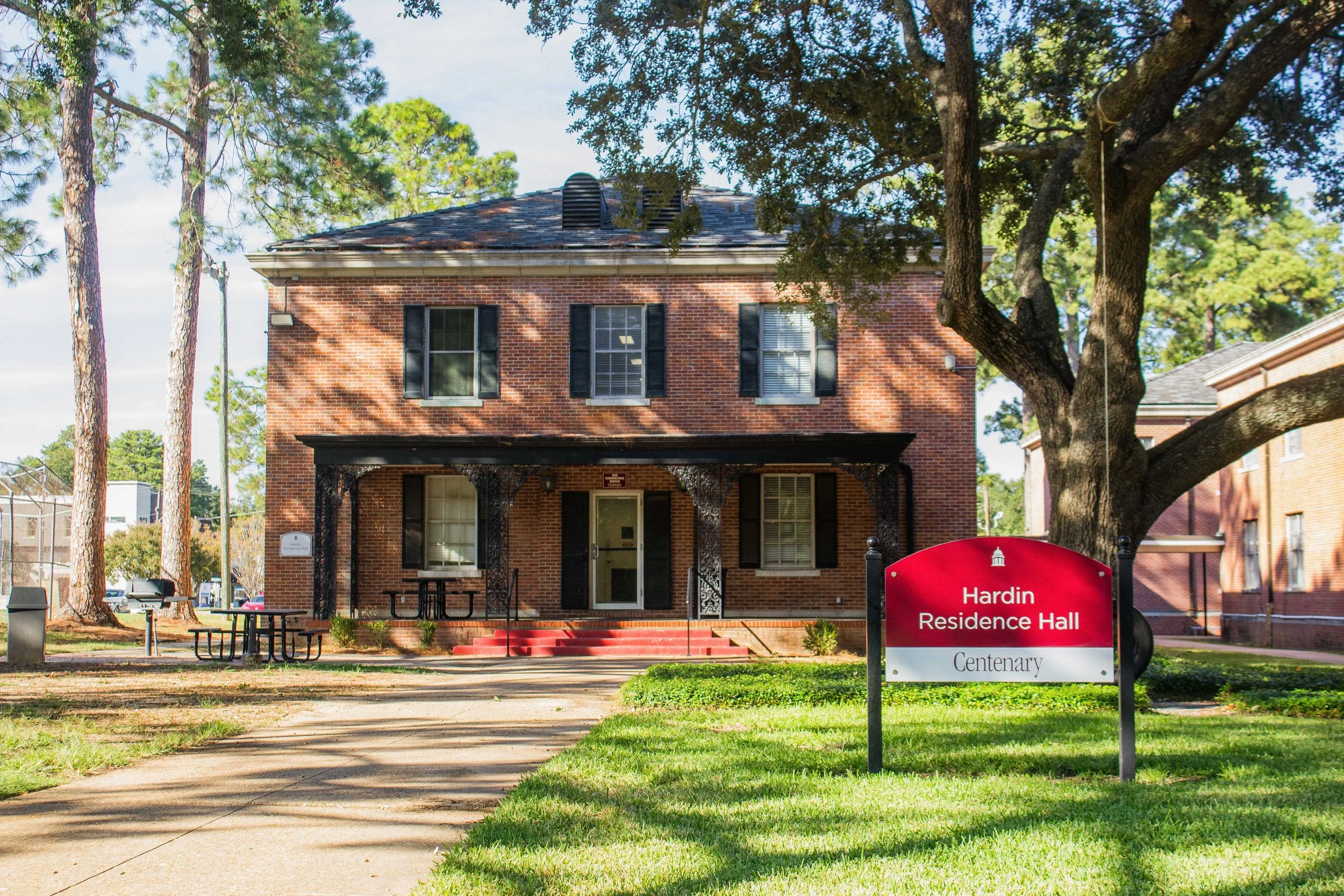
The front of Hardin Hall, where a break-in occurred on Friday, Oct. 2.
SGA President Isabela Vasquez said she and two other SGA members went to DPS the day it happened to "figure out what way we can support them" and to "stop the spread of misinformation."
Vasquez stated that DPS Chief Eddie showed them how the department operates, including footage from that night. They learned there are no cameras in front of Hardin, James or Sexton, and the closest one is by the Whited Room. The camera system is "completely maxed out," she said, and rewiring it would be costly. Cameras are also kept out of the residence halls for privacy. The campus has more than 200 cameras, and SGA is now looking at how to advocate for adding them in higher-priority areas.
SGA also wants to bring back self-defense and empowerment classes, which have not been held recently.
"We're not invincible, even with a trained police staff going around 24 hours a day," Vasquez said.
A campus safety town hall is set for Tuesday, Oct. 27, and SGA hopes to partner with DPS and student groups like the Jujitsu Club on a self-defense seminar on the Caf Deck.
Lighting on campus is another large concern for safety.
Annabeth Vogler, president of NOW (the National Organization for Women) and a member of the Residence Hall Association (RHA), said that she pushes campus leaders for practical measures. She stated that the director of facilities walks campus with a student each year to point out lighting problems, and the arboretum and other dark areas come up often. Vogler wants more overhead lighting along Kings Highway, where students walk back to the dorms, along with more path lighting that does not shine into dorm rooms at midnight.
“Safety isn't only about stopping someone from harming you,” Vogler explained. "It is unsafe to be walking at night and trip over a branch because you physically could not see the branch."
Pepper spray can be useful, but it is not a cure-all. Campus safety experts commonly recommend a combination of habits: stay aware, use the buddy system, know your resources, stick to well-lit routes and trust your instincts.
If you do carry pepper spray, learn how to use it. Keep it easy to reach, not buried in the bottom of a bag, and check the expiration date. Remember that it is meant to give you time to get away and call for help, not to start a confrontation.
Vogler recommends walking in groups and urges students to "never really assume that it can't be you." She said that some students resist carrying self-defense items because of an "I'll be fine" mindset. College can put students alone for the first time, she said, so the goal is to "minimize those moments, but also prepare for them."
Campus safety does not rest only on security officers or state laws. It depends on students looking out for one another, reporting suspicious behavior and knowing where to turn for help. Free tools like the pepper spray offered by DPS lower the barrier to being prepared, but the best protection is a community that pays attention.
If you are a student who has not stopped by the DPS office, now is a good time to do it. Ask what is available, learn the emergency procedures and make a safety plan before you need one.